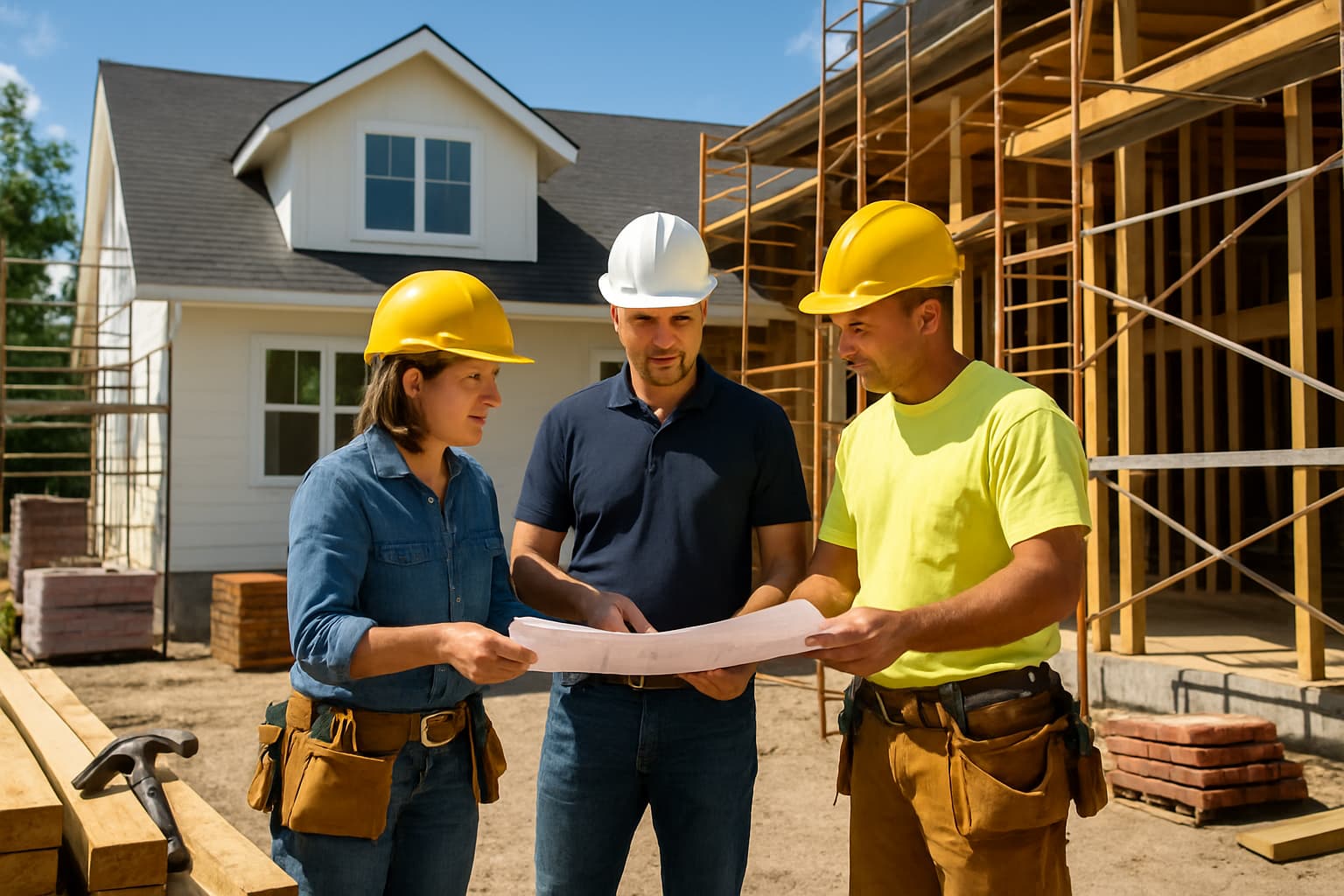
How to Finance 100% of Rehab Costs
Reviewed by Lisa Park, Compliance & Operations Director
When you're deep into a fix-and-flip project, renovation costs can quickly spiral beyond your initial budget. You might find yourself $20,000, $50,000, or even $100,000 short of what you need to complete the rehab. That's where 100% rehab financing comes in — a powerful tool that can fund your entire renovation budget while keeping your deal profitable.
Most real estate investors assume they'll need to bring cash for both the down payment AND a portion of rehab costs. While you'll still need cash for the purchase down payment, many private lenders will finance 100% of your renovation costs when the numbers work. This isn't a gimmick or too-good-to-be-true offer — it's standard practice among experienced hard money lenders who understand that completed projects generate the returns that pay back loans.
How 100% Rehab Financing Actually Works
The mechanics of full renovation funding are straightforward once you understand the constraints. Private lenders typically offer:
- 85-90% of purchase price (you bring 10-15% down)
- 100% of verified rehab costs (based on contractor bids and scope of work)
- Maximum total loan capped at 70-75% of after-repair value (ARV)
That third constraint is the key limitation. Your lender isn't writing you a blank check — they're ensuring the total loan amount stays within conservative loan-to-value ratios based on the property's future worth.
Here's a real example: You're buying a distressed property for $200,000 that will be worth $350,000 after a $80,000 renovation. A lender offering 90% purchase financing and 100% rehab financing would provide:
- Purchase loan: $200,000 × 90% = $180,000
- Rehab loan: $80,000 × 100% = $80,000
- Total loan: $260,000
But they'll also check the ARV constraint: $350,000 × 75% = $262,500. Since $260,000 is less than $262,500, this deal qualifies for 100% rehab financing.
The Math Behind Full Renovation Funding
Understanding the relationship between purchase price, rehab costs, and ARV is crucial for identifying deals that qualify for 100% rehab financing. The magic happens when you have sufficient spread between your total acquisition costs and the property's after-repair value.
Worked Example: Chicago Single-Family Flip
Let's walk through a complete scenario with a single-family property in Chicago:
Property Details:
- Purchase price: $200,000
- Estimated rehab costs: $80,000
- After-repair value: $350,000
- Loan terms: 90% purchase, 100% rehab, 75% max LTV-ARV
Financing Calculation:
- Down payment needed: $200,000 × 10% = $20,000
- Purchase financing: $200,000 × 90% = $180,000
- Rehab financing: $80,000 × 100% = $80,000
- Total loan amount: $260,000
- ARV constraint check: $350,000 × 75% = $262,500 ✓
Monthly Carrying Costs (assuming 11% interest rate for 12 months):
- Interest payment: $260,000 × 11% ÷ 12 = $2,383
- Plus origination fees, insurance, taxes, utilities = approximately $3,200/month
Project Profit Analysis:
- Total investment: $20,000 (down) + $50,000 (holding costs, fees, selling costs) = $70,000
- Gross profit: $350,000 - $200,000 - $80,000 = $70,000
- Net profit after all costs: approximately $20,000
- Cash-on-cash return: $20,000 ÷ $70,000 = 28.6% over 12 months
This example shows how 100% rehab financing can work even on moderately profitable flips. The key is having enough spread between your total costs and ARV to satisfy the lender's maximum LTV requirements.
When 100% Rehab Financing Is Available
Not every deal qualifies for full renovation funding. Lenders offering 100% rehab financing typically require specific deal parameters and borrower qualifications.
Deal Requirements
Minimum Profit Margins: Most lenders want to see at least 20-25% profit margin after all costs. This ensures you have skin in the game and the project generates sufficient return to justify the risk.
ARV Support: The property's after-repair value must be supported by recent comparable sales. Lenders typically require a licensed appraisal or broker price opinion (BPO) confirming the ARV estimate.
Detailed Scope of Work: You'll need contractor bids, architectural plans if applicable, and a line-item breakdown of all renovation costs. Lenders fund rehab draws based on completed work, so they need to understand exactly what you're building.
Property Location: 100% rehab financing is typically available in strong rental markets and areas with consistent flip activity. Lenders are more conservative in declining markets or rural areas with limited comparable sales.
Borrower Qualifications
Experience Level: Most lenders require 3+ completed fix-and-flip deals before offering 100% rehab financing. This isn't a loan product for first-time flippers — lenders want to see your track record of completing projects on time and budget.
Credit Score: Minimum 680 FICO score is standard, though some lenders accept 650+ with compensating factors like higher down payments or additional experience.
Liquidity Requirements: Even with 100% rehab financing, you'll need cash reserves. Most lenders require 2-6 months of payments in reserve accounts plus funds for unexpected overruns.
Debt-to-Income Ratios: Unlike conventional mortgages, private lenders focus more on deal-specific cash flow and asset values. However, they'll still verify you have sufficient income to service existing debts.
The ARV-to-Purchase Price Sensitivity Table
Whether your deal qualifies for 100% rehab financing depends heavily on the relationship between purchase price, rehab costs, and ARV. Here's a sensitivity analysis showing different scenarios:
| Purchase Price | Rehab Budget | Total Cost | ARV Needed (75% LTV) | ARV Needed (70% LTV) | Financing Feasible? |
|---|---|---|---|---|---|
| $150,000 | $50,000 | $200,000 | $266,667 | $285,714 | Yes (both ratios) |
| $200,000 | $80,000 | $280,000 | $373,333 | $400,000 | Yes (both ratios) |
| $250,000 | $100,000 | $350,000 | $466,667 | $500,000 | Depends on market |
| $300,000 | $120,000 | $420,000 | $560,000 | $600,000 | Challenging |
| $350,000 | $150,000 | $500,000 | $666,667 | $714,286 | Rarely feasible |
Assumes 90% purchase financing and 100% rehab financing
The table shows that 100% rehab financing works best when you're buying significantly below market value. The bigger the discount on your purchase price, the more renovation budget you can finance.
Alternatives When 100% Rehab Financing Isn't Available
If your deal doesn't qualify for full renovation funding, you have several options to bridge the gap:
Partial Rehab Financing
Most lenders offer 80-90% rehab financing even when 100% isn't available. This still covers the majority of your renovation costs while keeping the total loan within LTV constraints.
Bridge Loan Structures
Some lenders offer bridge loans with renovation components that provide more flexibility than traditional fix-and-flip financing. These typically allow higher LTV ratios in exchange for shorter terms.
Joint Venture Partnerships
Partner with other investors who can provide the additional rehab capital in exchange for profit splits. This preserves your cash for down payments on additional deals.
Hard Money Lines of Credit
Established investors can qualify for revolving credit lines that provide flexible access to both acquisition and renovation capital across multiple projects.
Common Mistakes with 100% Rehab Financing
Even experienced investors make critical errors when pursuing full renovation funding:
Underestimating Total Project Costs
The most expensive mistake is underestimating your true rehab budget. When you're financing 100% of renovation costs, cost overruns come entirely from your pocket. Build in 15-20% contingency above your contractor's estimates.
Ignoring Holding Costs
100% rehab financing doesn't cover carrying costs like interest, insurance, taxes, and utilities. A 12-month project with $3,000 monthly holding costs adds $36,000 to your total investment — money that must come from your cash reserves.
Overoptimistic ARV Projections
Inflating your ARV estimate to qualify for larger loan amounts is a recipe for disaster. Conservative ARV estimates protect you if market conditions change during your renovation period.
Insufficient Cash Reserves
Even with 100% rehab financing, you need significant cash reserves for unexpected issues, permit delays, or market downturns that extend your timeline.
Qualifying for Your First 100% Rehab Deal
If you're working toward qualifying for full renovation funding, focus on building the track record and relationships lenders require:
Start with Smaller Projects: Complete 3-4 successful flips with traditional financing (70-80% rehab funding) to demonstrate your execution capabilities.
Document Everything: Keep detailed records of your completed projects including before/after photos, final costs versus budgets, and sale prices versus projections.
Build Lender Relationships: Work consistently with 2-3 hard money lenders who understand your market and investment strategy. Relationship-based lending often provides more flexibility than shopping for the lowest rates.
Maintain Strong Financials: Keep your credit score above 680, maintain cash reserves, and avoid over-leveraging on other investments.
The Bottom Line
100% rehab financing can be a game-changing tool for experienced real estate investors, but it's not a magic solution for undercapitalized deals. The math must work: you need sufficient spread between your total acquisition costs and the property's after-repair value to stay within conservative loan-to-value ratios.
Remember that "100% rehab financing" doesn't mean zero cash investment. You'll still need funds for the purchase down payment, holding costs, unexpected overruns, and cash reserves. However, financing your entire renovation budget frees up capital for additional deals and accelerates your portfolio growth.
The key is finding deals with significant value-add potential — properties you can buy at substantial discounts to their after-repair value. When you consistently find these opportunities, 100% rehab financing becomes a powerful leverage tool rather than a desperate financing strategy.
Use our fix-and-flip calculator to model different financing scenarios and see how 100% rehab funding affects your project returns. You can also run the numbers on potential deals with our hard money calculator to understand total carrying costs.
Ready to explore 100% rehab financing for your next project? Get pre-qualified in 60 seconds. No obligation.
Written by James Whitfield, Investment Analyst
Reviewed by Lisa Park, Compliance Manager